
No More Broken Promises

No American Indian Elder should live in isolation. No American Indian Elder should go hungry.

Generation after generation has broken this promise. It's time to end the cycle.

Change begins with you. You can make a pledge today to remember the history of Native Americans in the United States, celebrate the strength of American Indian culture today, and get informed about how to build strong self-sufficient American Indian communities for tomorrow.

Sign the Pledge

Over 19,000 people of all creeds and races have signed this simple pledge to Remember. That's a start, but not nearly enough.

Our goal is to reach out to over 100,000 people from all over the United States and the world. We want to create a large, visible community of people who are not only calling for change, but willing to do something about it. Once you sign, we pledge to keep you informed, tell you about opportunities to get involved, and help you remember.


About National Relief Charities border=

NRC provides administrative oversight and outreach support for seven programs areas, which provide basic support and education programs to rural communities on economically depressed reservations in the Northern Plains and the Southwest. We work towards our mission in a way unique to most charities in the United States, and certainly unique to organizations working with Native Americans, and we have found that our approach creates enormous benefits for the communities we serve. We adhere to nine guiding principles that we call "The NRC Way".

How We Work

The NRC Way - Our Nine Guiding Principles

  1. We work with Program Partners in the communities that we serve.
    NRC seeks the input of Native American people living within their own community to identify needs, arrange volunteer support, provide lists that identify people in need of assistance, obtain facilities, and volunteer their own time to improve the community where they live. These volunteers partner with us to plan and implement NRC’s programs. We do not serve individuals on a “walk in” basis, but direct these people to the appropriate Program Partner or group in their community that can provide assistance.

  2. We give preference to remote locations without access to services and/or transportation.
    NRC provides a lifeline of supplies and services to Elders in remote locations.
    NRC brings Thanksgiving
    to remote locations.
    Many people living on reservations reside in extremely rural environments. They are not close to stores, medical facilities, or even basic utilities. Many don’t have the transportation necessary to make the long drive to the nearest town or facility. These are the people that we identify to help.

  3. We define a group to be served and serve everyone in that group.
    A group may be defined by age, location, need, or other criteria. This makes the criteria for receiving our assistance very clear. Using this system helps us avoid any feeling of unfairness or partiality within the community that could undermine our effectiveness and credibility.

  4. We make clear our expectations to our Program Partners in writing.
    We depend heavily on the people who live in reservation communities to make our programs work. We clearly outline our expectations as to what the community needs to do, as well as what we will do for the community. Building this line of communication makes our programs more effective because everyone’s expectations are clearly stated.

  5. We insist upon program accountability.
    We expect our Program Partners to care as much about the goods and services we provide to them as we do. Goods and services must go only to the intended beneficiaries. We fulfill our obligations to our Program Partners, and we expect our Program Partners to fulfill their obligations to us.

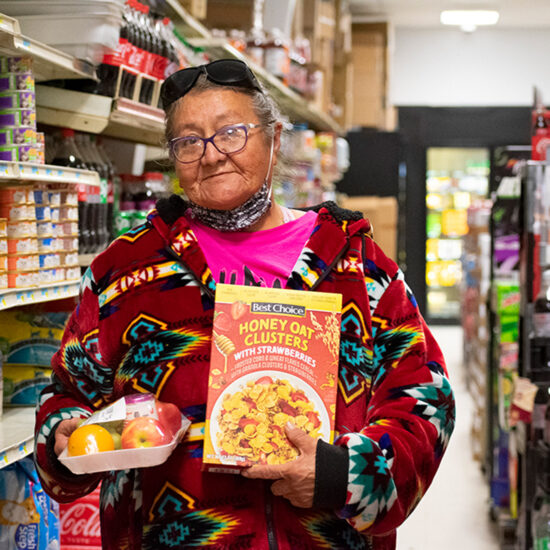
  6. We give preference to the purchase of healthy and nutritious food.
    Monetary donations help meet basic nutritional needs.
    Monetary donations help meet basic nutritional needs.
    A great number of the people we serve have diabetes, and many more will develop the disease in their lifetime. A healthy and nutritious diet is an important component in controlling diabetes. We work with the people we serve, taking into account the kinds of food they desire, but we strive to balance that with providing them with healthy food choices.

  7. We do not "dump and run".
    NRC will not deliver unwanted or inappropriate goods to reservation communities. The charitable community as a whole is particularly guilty of this act. Most charities decide for the communities they serve what goods and services they will receive. We concentrate on what our Program Partners are telling us they want for their communities. Unneeded and unwanted supplies will not be delivered by us.

  8. We are respectful of all monetary donations.
    Our money will be spent meaningfully and wisely. We keep our goals tightly focused and we constantly rethink our program strategies to get the most program value for every dollar spent. Whether it’s feeding people the only meal they may get that day, or weatherproofing a house, each of our programs will successfully move us towards accomplishing our mission.

  9. We are respectful of all Gift-in-Kind donations.
    No paper or pencils? NRC helps students succeed.
    No paper or pencils?
    NRC helps students succeed.
    We have many Gift-in-Kind donor-imposed restrictions that we strictly enforce. A major concern of the corporations that donate their products to us is the possibility of distributed goods competing with the retail market. NRC limits the mass distribution of donated products to rural reservation communities, and we provide a very limited distribution of donated products in small, poor urban areas.